
Beyond Credentials: God's Pattern of Empowering the Weak to Proclaim Truth

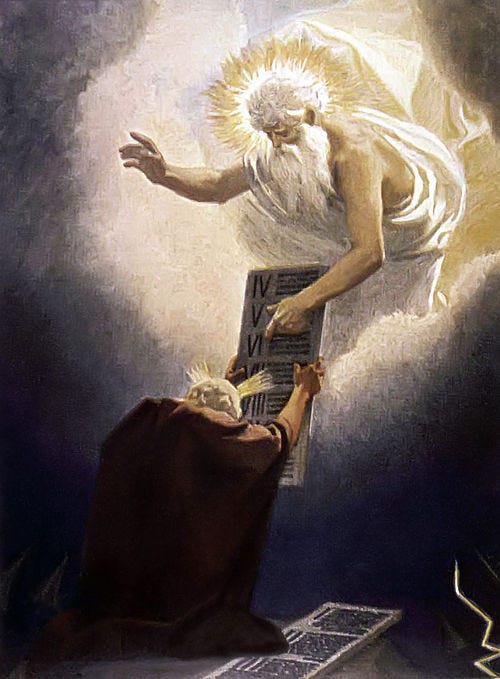
The world demands an appeal to authority—from men, the learned among them—for approval of what is true. If someone lacks several degrees or has not been peer-reviewed by these intellectual elites, the common person, who views themselves as inferior to such minds and perspectives, will often refuse the truth and light offered by anyone outside those circles. Individuals of humble origins cannot be trusted in their worldviews because of their perceived weakness. Those not sanctioned by the world, or who have not paid for certifications of approval to play in its spheres of influence, are automatically dismissed as fools or unworthy of being considered as sources of enlightenment. They are mocked as armchair academics or no-name barbarians of falsehoods, unworthy of being listened to. Many will simply refuse to entertain anyone who attempts to express their free speech and ideas through social media or YouTube if that person is not an approved authority from the circle of elites christened by the world of men.
However, this is not how God the Father works when choosing His servants to share His light and truth. He does not choose from the arrogant elite of men to spread His word to His children. He does the opposite of that pattern. Therefore, we should look elsewhere to find His true messengers. We should not trust in the arm of flesh.
The Father, through His Son, Jesus Christ, makes direct calls to the weak and unlearned to spread His gospel among His children. In Doctrine and Covenants Section 1, He explicitly states that He empowers the weak to break down the mighty and proclaim His gospel, even to kings, underscoring that His commandments come through servants in their weakness:
The weak things of the world shall come forth and break down the mighty and strong ones, that man should not counsel his fellow man, neither trust in the arm of flesh—But that every man might speak in the name of God the Lord, even the Savior of the world; That faith also might increase in the earth; That mine everlasting covenant might be established; That the fulness of my gospel might be proclaimed by the weak and the simple unto the ends of the world, and before kings and rulers. Behold, I am God and have spoken it; these commandments are of me, and were given unto my servants in their weakness, after the manner of their language, that they might come to understanding (D&C 1:19–24).
Here, the Lord calls upon the unlearned and despised to “thresh the nations” through His Spirit, echoing the theme of divine empowerment for the overlooked:
Wherefore, I call upon the weak things of the world, those who are unlearned and despised, to thresh the nations by the power of my Spirit (D&C 35:13).
The Lord reinforces the preparation of the weak to confound the wise, using them to “thresh the nations” in the last days:
To prepare the weak for those things which are coming on the earth, and for the Lord’s errand in the day when the weak shall confound the wise, and the little one become a strong nation, and two shall put their tens of thousands to flight. And by the weak things of the earth the Lord shall thresh the nations by the power of his Spirit (D&C 133:58–59).
God reassures us that this is His pattern to work through the weakness of His servants and through small means in the scriptures. In the Book of Mormon, Moroni laments his writing weakness but receives divine assurance that God gives weakness to foster humility, then makes “weak things become strong” through grace and faith—ideal for illustrating how God transforms inadequacy into strength for His messengers:
And I said unto him: Lord, the Gentiles will mock at these things, because of our weakness in writing; for Lord thou hast made us mighty in word by faith, but thou hast not made us mighty in writing; for thou hast made all this people that they could speak much, because of the Holy Ghost which thou hast given them; And thou hast made us that we could write but little, because of the awkwardness of our hands. Behold, thou hast not made us mighty in writing like unto the brother of Jared, for thou madest him that the things which he wrote were mighty even as thou art, unto the overpowering of man to read them. Thou hast also made our words powerful and great, even that we cannot write them; wherefore, when we write we behold our weakness, and stumble because of the placing of our words; and I fear lest the Gentiles shall mock at our words. And when I had said this, the Lord spake unto me, saying: Fools mock, but they shall mourn; and my grace is sufficient for the meek, that they shall take no advantage of your weakness; And if men come unto me I will show unto them their weakness. I give unto men weakness that they may be humble; and my grace is sufficient for all men that humble themselves before me; for if they humble themselves before me, and have faith in me, then will I make weak things become strong unto them (Ether 12:23–27).
Paul explains God’s choice of the foolish, weak, and despised to confound the wise and mighty, ensuring no one glories in their own strength—a direct parallel to the Restoration’s unlearned prophets:
For ye see your calling, brethren, how that not many wise men after the flesh, not many mighty, not many noble, are called: But God hath chosen the foolish things of the world to confound the wise; and God hath chosen the weak things of the world to confound the things which are mighty; And base things of the world, and things which are despised, hath God chosen, yea, and things which are not, to bring to nought things that are: That no flesh should glory in his presence (1 Corinthians 1:26–29).
The Book of Mormon prophet Jacob testifies that God reveals our weakness so we rely on His grace, highlighting the condescension in using imperfect servants for His marvelous works:
Nevertheless, the Lord God showeth us our weakness that we may know that it is by his grace, and his great condescensions unto the children of men, that we have power to do these things. Behold, great and marvelous are the works of the Lord. How unsearchable are the depths of the mysteries of him; and it is impossible that man should find out all his ways. And no man knoweth of his ways save it be revealed unto him; wherefore, brethren, despise not the revelations of God (Jacob 4:7–8).
Alma, another Book of Mormon prophet, teaches that God works by “small and simple things” to confound the wise and save souls, perfect for arguing how unassuming servants fulfill eternal purposes:
Now ye may suppose that this is foolishness in me; but behold I say unto you, that by small and simple things are great things brought to pass; and small means in many instances doth confound the wise. And the Lord God doth work by means to bring about his great and eternal purposes; and by very small means the Lord doth confound the wise and bringeth about the salvation of many souls (Alma 37:6–7).
The scriptures also warn of the condemnation that can arise for those who rely upon their own wisdom and trust in the arm of flesh, leading to intellectual pride and spiritual peril. God values learning and critical thinking when submitted to His counsel (e.g., “to be learned is good if they hearken unto the counsels of God”). He desires that we use our intelligence and critical thinking skills to formulate questions that we bring to Him for guidance and to obtain wisdom. This balance counters the “natural man” (Mosiah 3:19) whose arrogance becomes a stumbling block. 2 Nephi 9:28–29 is the cornerstone, directly addressing how self-reliant wisdom becomes “foolishness” and invites perishing:
O that cunning plan of the evil one! O the vainness, and the frailties, and the foolishness of men! When they are learned they think they are wise, and they hearken not unto the counsel of God, for they set it aside, supposing they know of themselves, wherefore, their wisdom is foolishness and it profiteth them not. And they shall perish. But to be learned is good if they hearken unto the counsels of God (2 Nephi 9:28–29).
The Old Testament also provides a timeless exhortation to trust God over personal understanding, warning against self-proclaimed wisdom as a path to evil:
Trust in the Lord with all thine heart; and lean not unto thine own understanding. In all thy ways acknowledge him, and he shall direct thy paths. Be not wise in thine own eyes: fear the Lord, and depart from evil (Proverbs 3:5–7).
Isaiah offers a prophetic “woe” to those wise and prudent in their own sight, framing self-reliance as divine condemnation:
Woe unto them that are wise in their own eyes, and prudent in their own sight! (Isaiah 5:21).
The scriptures are full of examples of God calling humble, uneducated, or seemingly unqualified individuals to proclaim His truth, reinforcing this pattern.
Old Testament Examples
Moses: A shepherd in exile with a speech impediment, he protested his calling due to feeling inadequate and slow of speech. God assured him, “Who hath made man’s mouth? or who maketh the dumb, or deaf, or the seeing, or the blind? have not I the Lord?” (Exodus 4:10–12). This highlights God’s empowerment of the “slow of tongue” to lead a nation.
Jeremiah: Called as a youth, he objected, “Ah, Lord God! behold, I cannot speak: for I am a child.” God touched his mouth and promised to provide the words (Jeremiah 1:4–9). His “unlearned” youth didn’t disqualify him from prophesying to nations.
Amos: A simple herdsman and fig gatherer from Tekoa (not a trained prophet or priest), he declared, “I was no prophet, neither was I a prophet’s son; but I was an herdman, and a gatherer of sycomore fruit: And the Lord took me as I followed the flock, and the Lord said unto me, Go, prophesy unto my people Israel” (Amos 7:14–15). His rustic origins made his message all the more authoritative.
New Testament Examples
Peter and John: Unlearned fishermen, described by Jewish leaders as “unlearned and ignorant men,” yet they spoke with boldness after Pentecost, astonishing their audience because “they took knowledge of them, that they had been with Jesus” (Acts 4:13). This mirrors the pattern of God using simple men to confound the elite.
Book of Mormon Examples
Alma the Younger: Initially a proud, rebellious young man from a prophetic lineage, he was humbled by an angelic visitation and became a powerful missionary despite his past “weakness” (Mosiah 27:8–19; Alma 36:1–3). His transformation emphasizes redemption through humility.
Nephi: Though from a noble family, he was young and initially felt his weakness in writing and expression, yet God strengthened him to lead and record sacred history (1 Nephi 1:1–3; 2 Nephi 33:1–3). His humility in acknowledging limitations parallels Moroni’s plea in Ether 12:23–27.
These examples collectively illustrate God’s deliberate inversion of worldly expectations, preparing the way for modern prophets like Joseph Smith—a 14-year-old farm boy from upstate New York with limited formal education, who received the First Vision and translated the Book of Mormon through divine means despite his youth and circumstances (Joseph Smith—History 1:15–20).
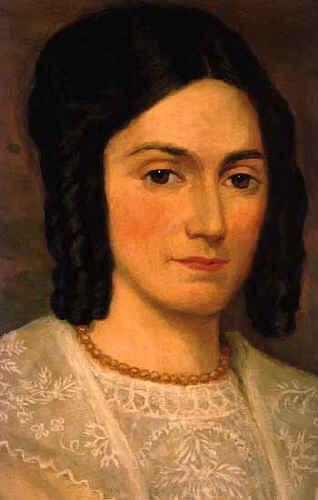
Emma Smith, reflecting on Joseph’s early life and abilities, stated: “Joseph Smith could neither write nor dictate a coherent and well-worded letter.” This quote, from her “Last Testimony of Sister Emma,” was published in The Saint’s Herald, Vol. 26, No. 19 (October 1, 1879), p. 289. It underscores the divine origin of his prophetic work, as she contrasted his limited education with the sophisticated dictation of the Book of Mormon, which she helped scribe. This testimony, given late in her life to her son Joseph Smith III, serves as a powerful primary source affirming the thesis of God’s use of the unlearned.
When it comes to the word and work of God, it will not be prophesied and spread to the world by the great, the mighty, or the vastly learned. That is not the pattern established by God throughout history in the Old and New Testaments, the Book of Mormon, or in modern times through Joseph Smith. When a humble and weak individual presents gospel truths, we should not demand that they prove themselves through peer-reviewed academic sources. We should not dismiss those who attempt to share the truth through a YouTube video. We should not ignore a message from a no-name or a “nobody” who randomly offers us some spiritual insight or message on social media. These could very well be God’s servants and messengers sent into the world to proclaim His truth. They can be His servants bearing witness to the truths they have discovered through a broken heart and contrite spirit. These could very well be His prophets or apostles sent to warn His children and help gather them to Zion. When presented with the good word, what we should do is ponder the message, compare it to scripture, and then bring it to the Father in sincere prayer, with real intent, and a heart willing to sacrifice all things to know His truths. Then we will not miss His weak, simple, and unlearned servants when they present themselves to us.